:max_bytes(150000):strip_icc():focal(614x436:616x438):format(webp)/grizzly-399-112025-47f8cca505014549a1928da6099460e8.jpg)
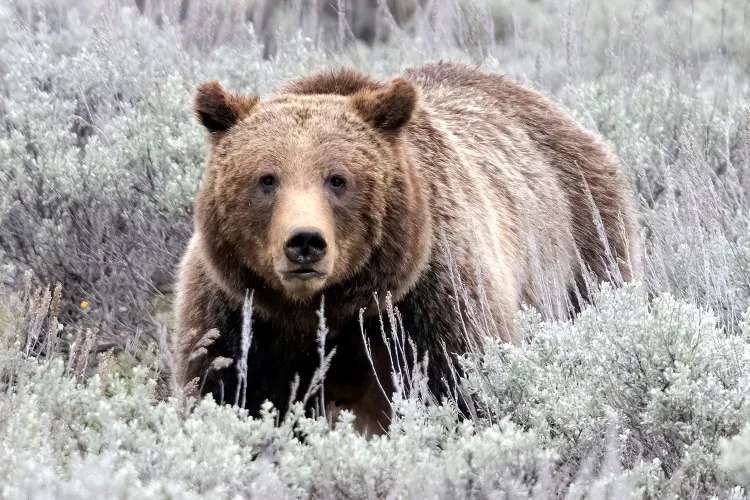
Grizzly bear 399 in Grand Teton National Park in Wyoming
The Trump administration is seeking to roll back protections for endangered species and their habitats.
According to the Associated Press and CNN, the Interior Department’s Fish and Wildlife Service and NOAA’s National Marine Fisheries Service have proposed rules that would see Biden-era safeguards removed for plants and animals threatened by habitat loss.
The changes to the Endangered Species Act were first proposed by Republicans during President Donald Trump’s first term in office and later blocked by the administration of former President Joe Biden.
These new rules would allow economic factors to be considered when deciding which species to protect under the act. The two agencies are also proposing to repeal the Endangered Species Act’s “blanket rule,” which extends endangered-level protections to species listed as “threatened” with extinction. Government agencies would instead have to make rules specific to different species. According to Humane World for Animals, over 100 vulnerable species, including grizzly bears, wolverines, and some wolf species, are listed as threatened under the Endangered Species Act.
Property rights groups have previously challenged the blanket rule in federal court, the outlets reported, but that litigation paused after the Trump administration moved to rewrite the rule. Before the change to the blanker rule is finalized, the rule will undergo a 30-day public comment period.
:max_bytes(150000):strip_icc():focal(749x508:751x510):format(webp)/noaa-headquarters-112025-4d4ee10e712741dab03c230fdaaf5511.jpg)
Trump administration officials defended their proposal as common sense, as energy, mining, and development groups have complained that environmental laws have become too strict.
“This administration is restoring the Endangered Species Act to its original intent, protecting species through clear, consistent, and lawful standards that also respect the livelihoods of Americans who depend on our land and resources,” Interior Sec. Doug Burgum told CNN in a statement.
The U.S. Fish and Wildlife Service, which is responsible for “recovering and conserving our nation’s imperiled species,” categorizes species into five categories: endangered, threatened, endangered based on similarity of appearance to an existing listed species, threatened based on similarity of appearance to an existing listed species, essential experimental population, and nonessential experimental population.
Some animals on the endangered species list include cheetahs, lemurs, marine otters, black rhinoceroses, blue whales, polar bears, and several others.
Several environmental groups have expressed their concerns that the Trump administration’s proposed changes could delay efforts to save species facing extinction, such as killer whales, monarch butterflies, and Florida manatees.
:max_bytes(150000):strip_icc():focal(795x229:797x231):format(webp)/wolverine-112025-58e8b441e292477ab939bc9502aeccdf.jpg)
