In the shadowy depths of the ocean, where sunlight fades into darkness, jellyfish drift like living ghosts. They move without effort, pulsing gently through the water as if carried by invisible currents. Despite having no brain, no bones, and no blood, these strange creatures have survived for more than 500 million years, long before the first dinosaurs ever walked the Earth.
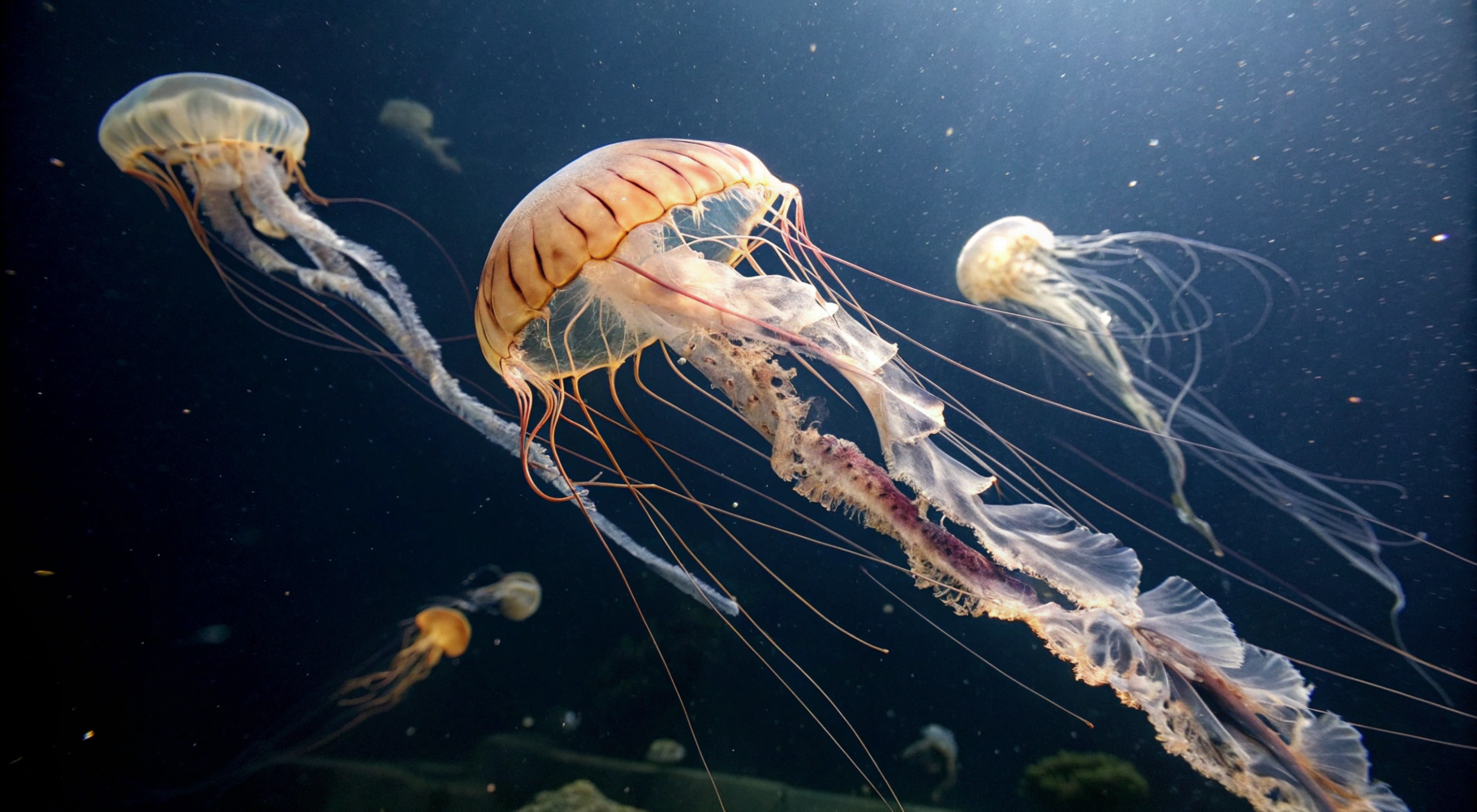
Jellyfish are often described as beautiful, with their glowing bodies and delicate tentacles. But behind their graceful appearance lies an eerie mystery. They possess a simple nerve net instead of a brain, yet they hunt, navigate, and survive with uncanny efficiency. Their very existence challenges our understanding of what “intelligence” really means.
One of the most unsettling things about jellyfish is their stinging power. Many species carry venom-filled cells called nematocysts, which fire like microscopic harpoons when touched. A single brush against the wrong jellyfish can leave a blistering burn—or, in rare cases, a deadly sting. They may look soft and harmless, but they are some of the ocean’s most quietly dangerous predators.
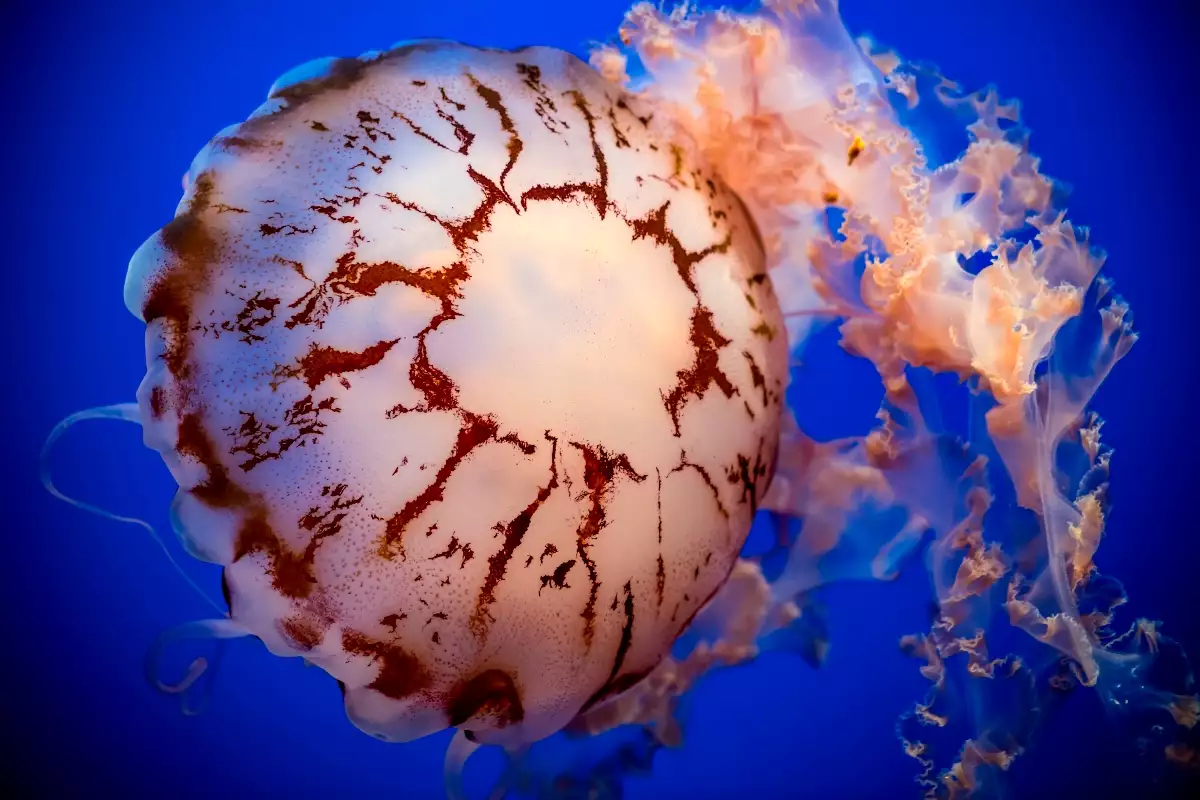
Despite their ghost-like drifting, jellyfish are skilled hunters. Their tentacles form a curtain of traps, paralyzing small fish and plankton that wander too close. Once captured, prey is slowly transported to the jellyfish’s mouth, located in the center of its bell-shaped body. Without eyes, ears, or thought, it feeds purely through instinct and ancient biological programming.
Not all jellyfish remain tiny and delicate. Some grow to monstrous sizes. The Lion’s Mane jellyfish, found in cold northern seas, can reach more than 120 feet in tentacle length—longer than a blue whale. Encountering one in the dark ocean is like drifting past a glowing underwater chandelier made of living threads.
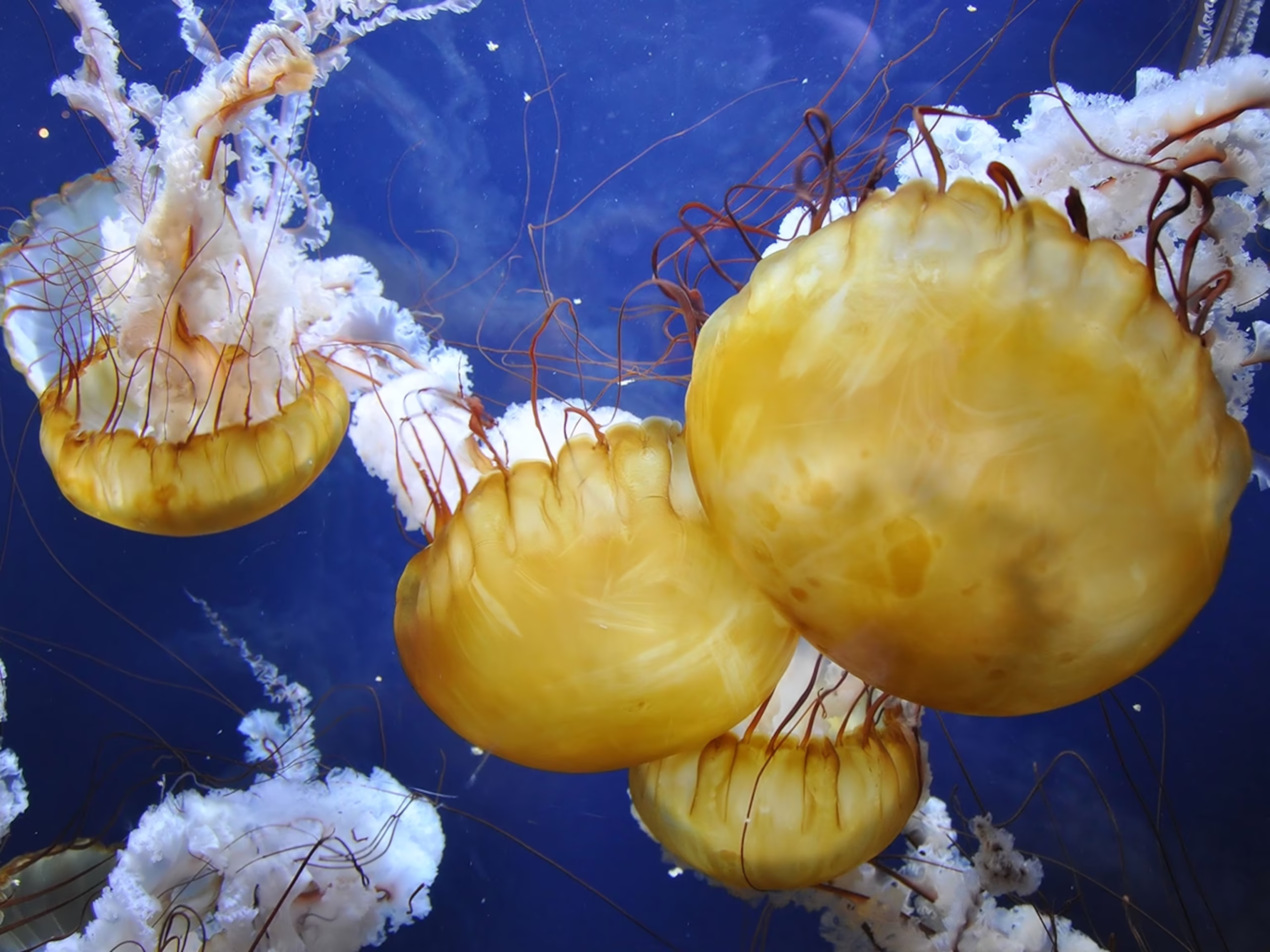
Yet jellyfish are not just creatures of fear—they’re creatures of wonder. Some species, like the Crystal Jelly, emit a natural blue-green glow through bioluminescence. This light can be used to lure prey, confuse predators, or communicate. When hundreds glow at once, the ocean appears to sparkle with floating stars.
Even more astonishing is the immortal jellyfish, Turritopsis dohrnii. When injured or stressed, it can revert its cells back to a younger stage, essentially restarting its life cycle. While not truly “immortal,” it is capable of reversing aging in a way no other known animal can. Scientists continue to study this creature, hoping it may one day unlock secrets about human aging.
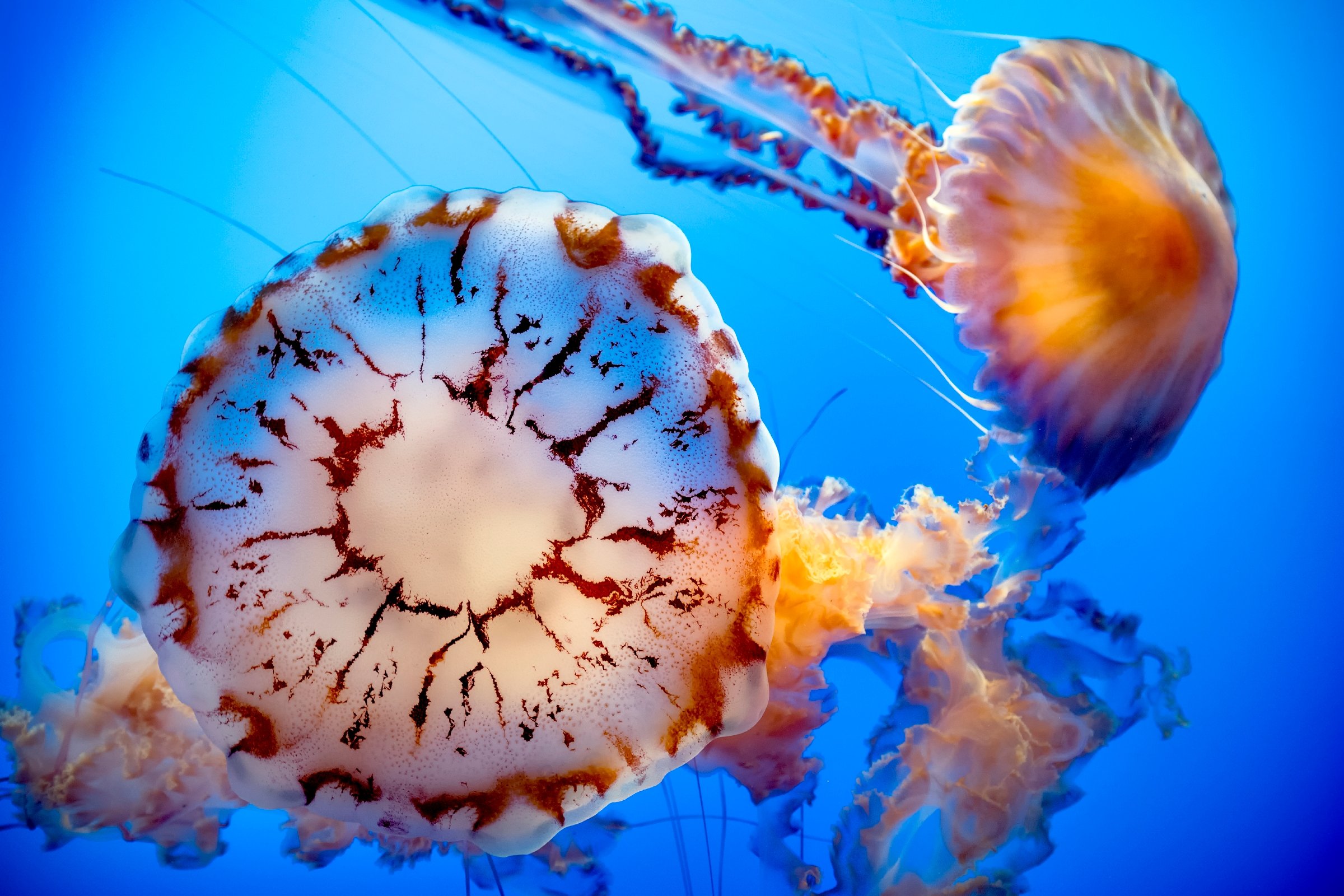
Jellyfish also play a surprising role in shaping marine environments. When populations bloom, sometimes in massive swarms called “jellyfish blooms,” they can affect entire ecosystems. These blooms can clog fishing nets, overwhelm beaches, and even disable power plants by blocking seawater intake systems. Their influence on the world is far greater than their simple bodies suggest.
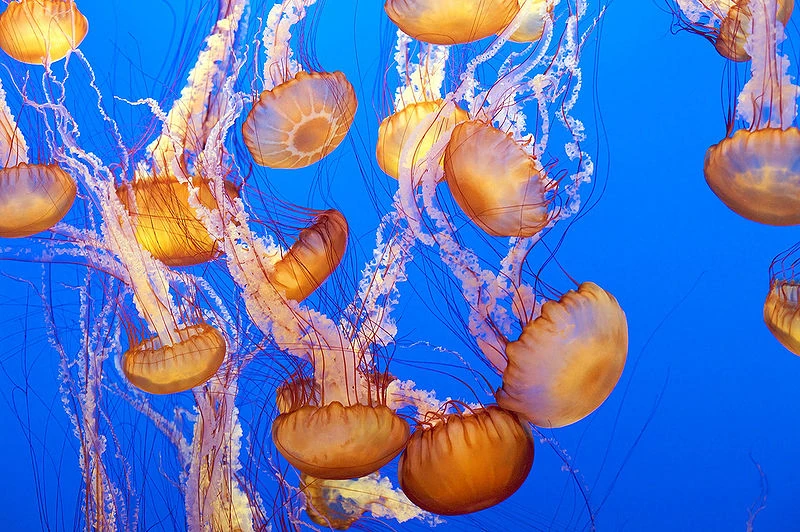
As climate change warms the oceans and overfishing disrupts food chains, jellyfish populations are rising in many parts of the world. Their ability to survive in harsh, low-oxygen environments means they may become even more common in the future. For some scientists, this is both a warning and a reminder of nature’s adaptability.
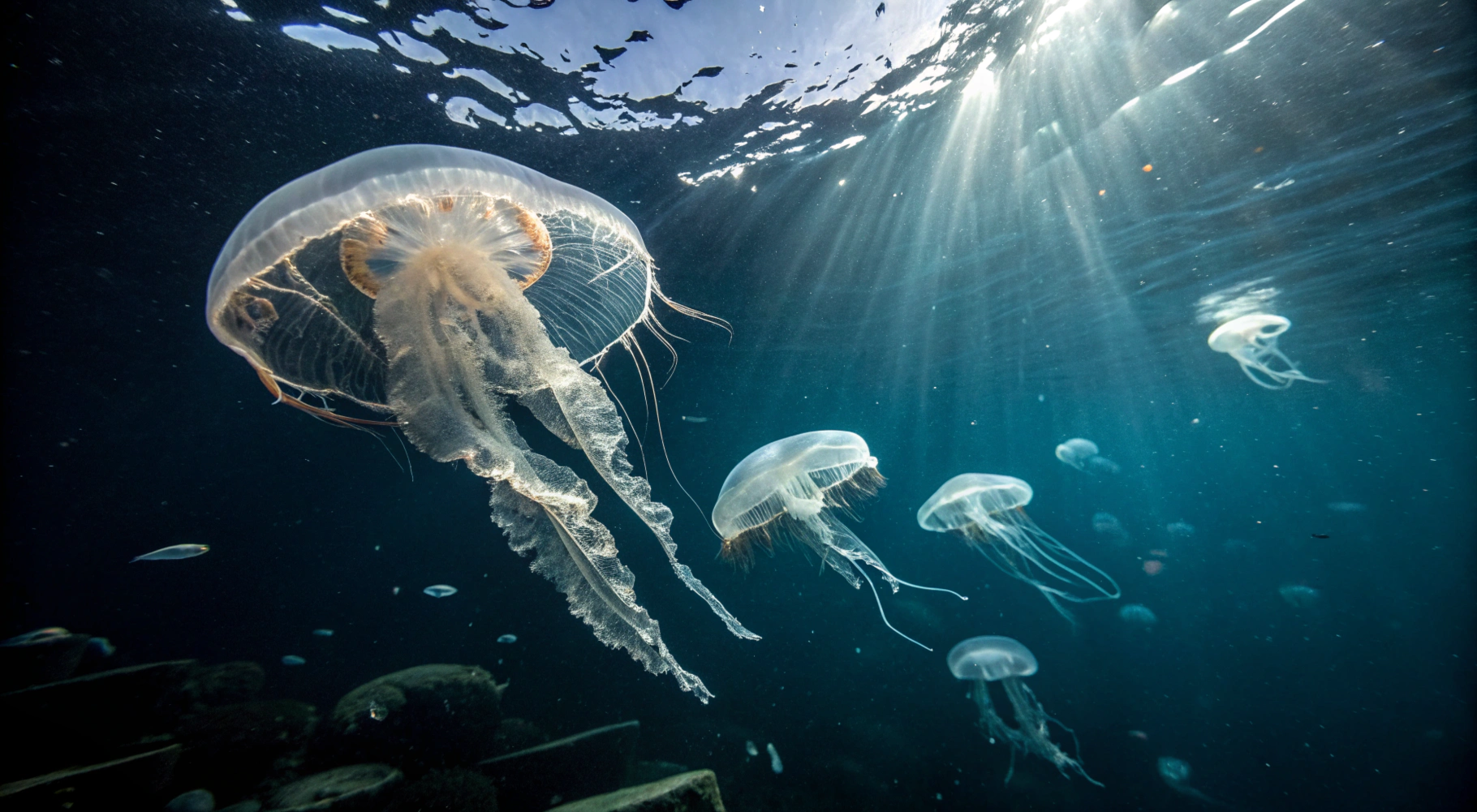
Whether admired for their glowing beauty or feared for their mysterious sting, jellyfish remain one of the ocean’s most fascinating creatures. They are ancient, otherworldly, and impossible to fully understand. In their drifting, pulsing dance, they remind us that life can take forms far stranger—and far more beautiful—than anything we imagine.
